HMS Victory
1:48 in progress
Henk’s 1:48 scale HMS Victory tells two stories at once: a planked exterior alongside deliberately exposed construction. The ship is still a work in progress, and the surrounding historical dockyard is being designed.
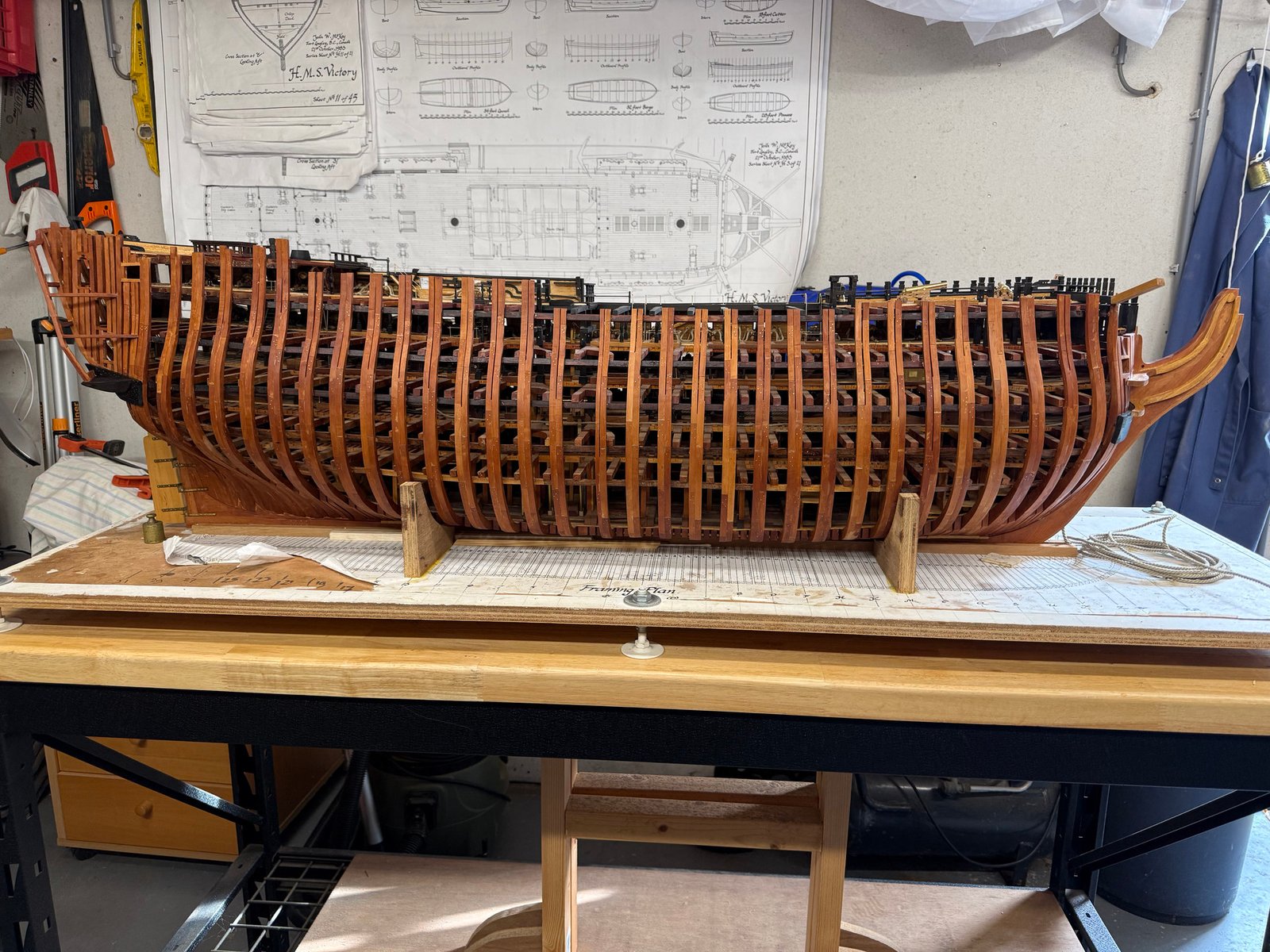
A ship that reveals its structure
The planked exterior and exposed interior offer different views of a wooden warship. Colour, materials and craftsmanship illuminate the structure, while modern modelling choices remain distinct from historical claims.
The build history
Original build photographs and dated records remain part of the story, including choices later reconsidered.
Build journal ↗Quarter Deck – Part 1Quarter Deck – Part 2Middle Deck – Part 1Middle Deck – Part 2Upper Deck – Part 1Victory 1:72
Henk’s earlier Victory model forms part of the project’s background. Selected historic material may be added later.
The early building period
Chatham, 1759–1765: a historical frame of reference
The proposed shipyard scene explores Victory’s early building years in Chatham. Copper sheathing belongs to a later stage of the ship’s history, not this initial construction setting. The existing model is not presented as a fully verified snapshot of one date: some details may reflect later configurations and will be labelled accordingly.
Deliberately unfinished areas
Open sections can help explain how the vessel was constructed. The precise boundaries between sections deliberately left visible, work still to be completed and areas awaiting research are being documented. An exposed area should not automatically be interpreted as neglected work.
Masts and bowsprit: a separate decision
Earlier plans to omit masts and bowsprit arose partly from space considerations. That decision is separate from the historical period chosen for the dockyard scene and from the deliberate presentation of exposed hull structures. The detailed decision record still requires confirmation.
Historical context: London Museum: Victory and her construction history; Museum Wales: an account of later copper sheathing. These references do not establish the accuracy of every model detail.
One of the hardest choices: when to stop building
For many years, the aim was to build the most complete model possible. The idea of presenting Victory in a working shipyard changed that goal. Some parts would have to remain visibly unfinished so visitors could see what lay beneath the planking.
This was not a decision to hide unfinished work. It was a different way of telling the story, from an enclosed hull to exposed frames and interior structures. Photographs and historical references are being used to document where those boundaries belong.
Some design decisions predate the dockyard concept. Omitting masts because of available space is not evidence for the historical state of the ship in 1765.